
How Poor Listening Creates Conflict
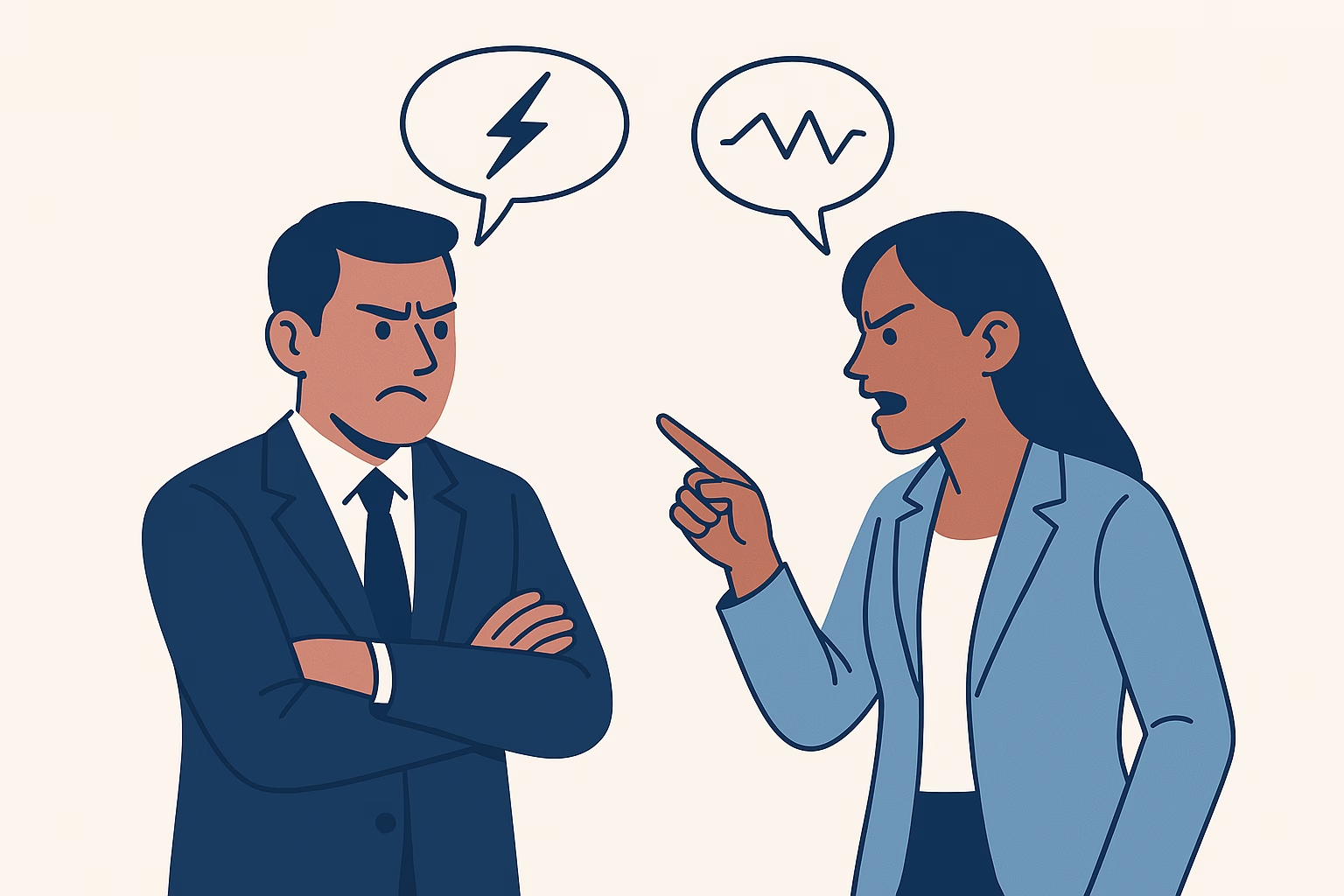
Conflict is often blamed on differences—different opinions, different priorities, different personalities. But in reality, conflict usually doesn’t begin with disagreement. It begins with disconnection. More specifically, it begins when people feel they are not being heard.
Poor listening is one of the most common, yet least recognized, drivers of conflict in both personal and professional settings. Understanding how this happens can transform the way we approach difficult conversations.
Feeling Unheard Leads to Emotional Escalation
When people don’t feel listened to, the emotional impact can be immediate and powerful. They may feel frustrated, disrespected, or invalidated. Even when the actual outcome of a conversation isn’t harmful, the experience of not being heard can trigger defensiveness or anger.
This is why conflicts often escalate quickly. It’s not always about the decision or the facts—it’s about the emotional response to being overlooked.
Key idea: People escalate conflict when they feel ignored, not necessarily when they disagree.
Misunderstanding Intent
Poor listening also leads to misinterpretation. When people aren’t fully paying attention—or aren’t asking clarifying questions—they begin to fill in gaps on their own. Unfortunately, those assumptions tend to lean negative.
Instead of hearing what is actually being said, people often hear what they fear. A simple misunderstanding can quickly spiral into conflict when intent is misread. For example, someone might think, “They don’t care,” when in reality, the issue is simply that “They don’t understand yet.”
Without clear listening, assumptions replace understanding—and conflict follows.
Listening to Respond, Not to Understand
Another major source of conflict is how people listen. Many conversations are not truly conversations—they are exchanges of prepared responses. While one person is talking, the other is already forming a rebuttal, preparing a defense, or thinking about how to prove their point.
This creates a competitive dynamic. Instead of exploring each other’s perspectives, people begin to argue positions. Conversations turn into debates, and debates often turn into conflict.
Key insight: Listening defensively creates positional conflict, not problem-solving dialogue.
Missing the Real Issue
When listening is shallow, people hear only the surface of what is being said. They hear demands instead of underlying needs.
A statement like “You never help” may actually reflect feeling overwhelmed. “This isn’t fair” may reflect feeling excluded or powerless. When these deeper needs are missed, any solution will likely address the wrong problem.
As a result, the same conflict resurfaces again and again—because the real issue was never understood in the first place.
Lack of Validation
One of the most powerful tools in preventing conflict is simple acknowledgment. Listening doesn’t mean agreeing, but it does require recognizing another person’s experience.
Conflict intensifies when people feel dismissed:
- “You’re overreacting.”
- “That’s not a big deal.”
These responses shut down communication and increase frustration. On the other hand, validation—such as saying, “I can see why that would be frustrating”—can immediately calm tension.
Important distinction: You can say “I hear you” without saying “You’re right.”
Power Struggles and Identity
When people are not listened to, the message they often receive is deeper than the conversation itself. It can feel like:
- “My voice matters more than yours.”
- “Your experience doesn’t count.”
At that point, conflict shifts. It is no longer about the issue—it becomes about respect, dignity, and identity. These types of conflicts are harder to resolve because they are tied to personal meaning, not just practical outcomes.
The Cycle of Escalation
Poor listening also creates a repeating pattern:
- One person feels unheard
- They become louder or more rigid
- The other person reacts defensively or shuts down
- Listening decreases even further
This cycle feeds itself. Conflict becomes less about the original issue and more about the interaction pattern.
Final Takeaways
Conflict is rarely just about disagreement. More often, it’s about a breakdown in connection.
- People don’t fight to be right; they fight to be heard
- Listening is a de-escalation tool, not a reward
- Most conflicts intensify the moment someone stops feeling understood
When we improve how we listen—by slowing down, getting curious, and acknowledging others—we don’t just reduce conflict. We create the conditions for resolution, trust, and stronger relationships.
Interested in reading more about this topic and many others? Please visit my Helpful Articles, Links, and Books page – https://rissmediation.com/helpful-articles-links/ or my blog at https://rissmediation.com/blog/.