
What “Fair” Means in Mediation (It’s Not Always “Equal”)
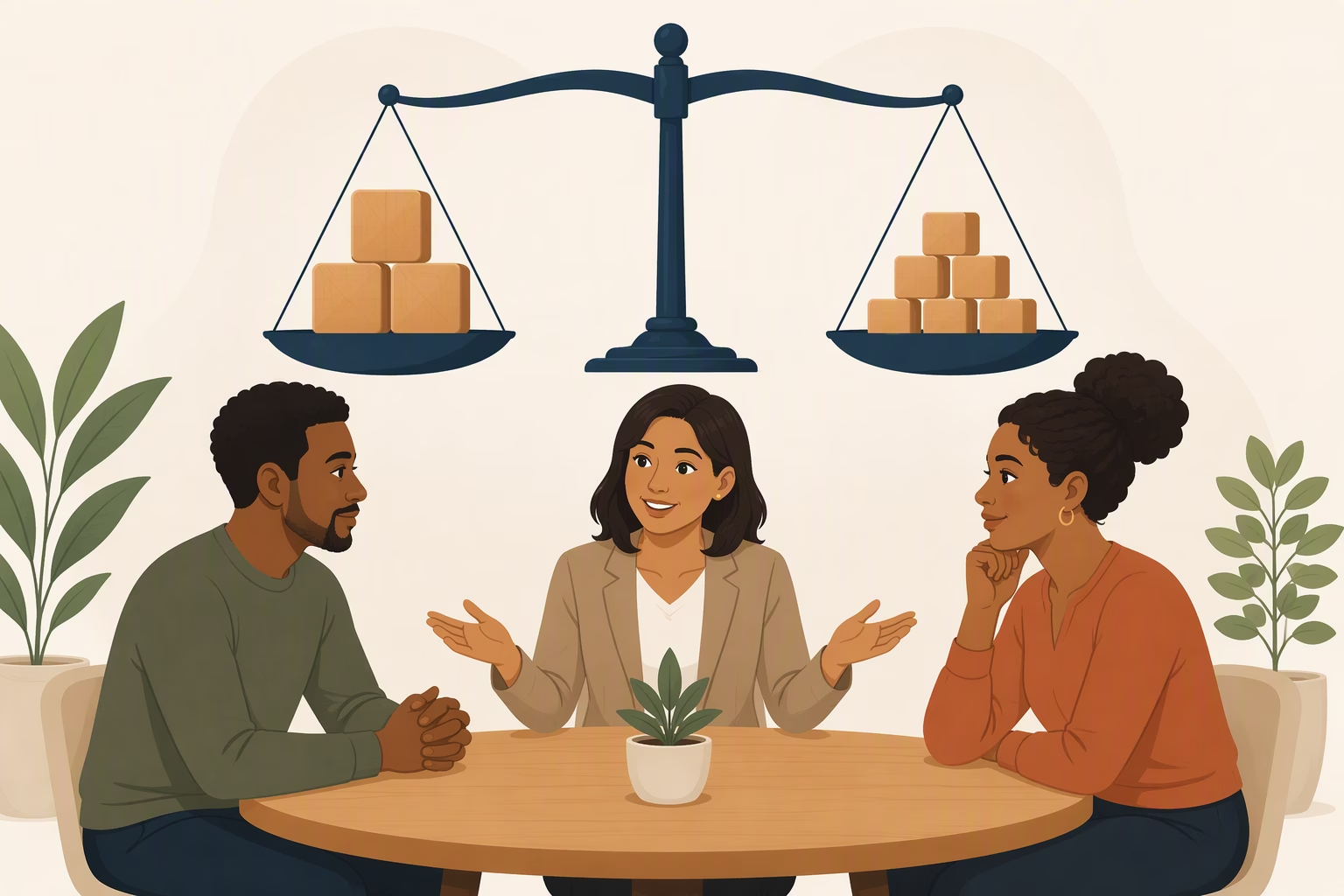
One of the most common phrases heard in mediation is, “I just want what’s fair.” It sounds simple enough. But as mediation unfolds, participants often discover that their definitions of fair are very different. In fact, one of the most important lessons of mediation is that fair does not always mean equal.
When people think about fairness, they often imagine splitting everything right down the middle. Fifty-fifty. Equal shares. Equal time. Equal responsibility. While equality can sometimes create a fair outcome, there are many situations where a strictly equal division may not actually meet the needs, circumstances, or interests of everyone involved.
The Difference Between Equal and Fair
Imagine two children trying to look over a fence. One child is much taller than the other. Giving each child the same-sized box to stand on is equal treatment. But if the shorter child still cannot see over the fence, the result is not truly fair.
The same principle applies in mediation.
Fairness considers the unique circumstances of the people involved. It looks beyond simple arithmetic and asks bigger questions:
- What does each person need?
- What contributions has each person made?
- What responsibilities does each person carry?
- What practical realities exist moving forward?
Mediation provides a space to explore these questions rather than forcing parties into a rigid formula.
Fairness in Divorce Mediation
Divorce mediation offers many examples of how fair outcomes may differ from equal ones.
Suppose one spouse stayed home for many years to raise children while the other built a career. An equal division of assets may seem fair on paper, but the stay-at-home parent may face greater challenges becoming financially self-sufficient after separation.
Similarly, a couple may decide that one spouse keeps the family home while the other receives a larger share of retirement accounts or other assets. The numbers may not appear perfectly equal, yet both spouses may view the agreement as fair because it reflects their priorities and future needs.
Fairness in mediation often requires looking at the whole picture rather than focusing on a single number.
Fairness in Parenting Agreements
Parents frequently struggle with the idea that fairness means equal parenting time. In some families, a 50/50 schedule works beautifully. In others, it may not be the most practical or beneficial arrangement.
A fair parenting plan considers factors such as:
- The children’s ages and developmental needs
- School schedules
- Parents’ work commitments
- Travel distances
- Special medical or educational needs
- Existing parent-child relationships
What matters most is creating an arrangement that supports the children’s well-being while allowing both parents to maintain meaningful involvement in their lives.
A schedule that is not exactly equal may still be fair if it serves the best interests of the children and accommodates the realities of family life.
Fairness Is Personal
One reason mediation can be so effective is that it recognizes that fairness is often subjective.
A judge may be limited by legal standards and available evidence. Mediating participants, however, have the flexibility to define fairness for themselves.
For example, one person may place great importance on keeping a family business intact. Another may care more about preserving retirement savings. Through negotiation and discussion, participants can trade priorities and create solutions tailored to their specific needs.
This flexibility allows people to move beyond positions and focus on underlying interests.
Fairness Does Not Mean Getting Everything You Want
It is important to remember that fairness is not the same as winning.
In successful mediations, both participants usually make compromises. Neither side gets everything they hoped for, but both leave with an agreement they can live with.
A fair agreement is often one where:
- Everyone has been heard.
- Relevant information has been shared.
- The decision-making process is transparent.
- Each participant has had meaningful input.
- The final outcome addresses the most important concerns of both parties.
When these elements are present, people are more likely to view the outcome as fair, even if they did not receive every item on their wish list.
The Value of a Fair Process
Interestingly, people often judge fairness based as much on the process as on the final result.
When participants have an opportunity to speak openly, ask questions, express concerns, and contribute to solutions, they are more likely to accept the outcome. Feeling respected and understood can matter just as much as the specifics of the agreement itself.
This is one of mediation’s greatest strengths. Rather than having a solution imposed by someone else, the participants work together to create their own resolution.
Looking Beyond the Numbers
Fairness is rarely about simple math. It is about balancing needs, responsibilities, goals, and future realities. Sometimes a fair outcome looks equal. Other times it does not.
Mediation creates an opportunity to move beyond rigid formulas and explore what truly works for the people involved. By focusing on interests rather than positions, participants can develop agreements that feel balanced, practical, and sustainable.
In the end, the most successful mediation agreements are not necessarily the ones where everything is divided equally. They are the ones where the participants can honestly say, “This works for us,” and move forward with confidence.
Interested in reading more about this topic and many others? Please visit my Helpful Articles, Links, and Books page – https://rissmediation.com/helpful-articles-links/ or my blog at https://rissmediation.com/blog/.